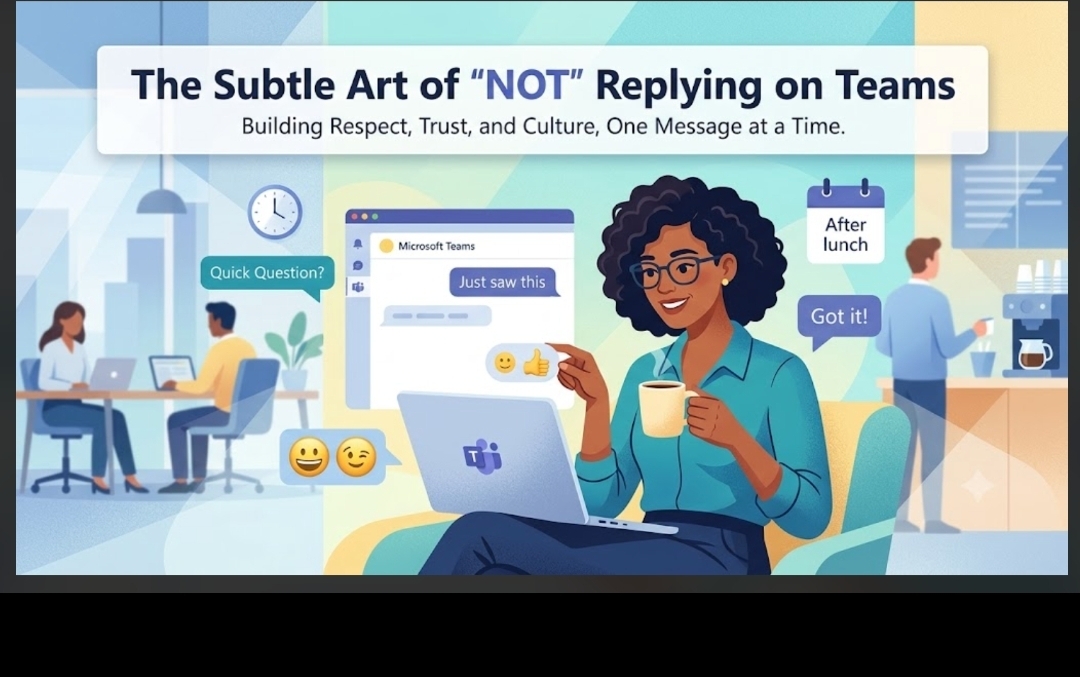
The Subtle Art of “NOT” Replying on Teams
If you work in a modern office, chances are your day starts not with coffee, but with a ping on Microsoft Teams. Someone’s already dropped a “quick question,” another has tagged you in a thread, and there’s a GIF of a cat doing something oddly motivational. Welcome to the digital watercooler.
Here’s the thing: how you respond on Teams says a lot about you. It’s not about replying instantly to everything (we’re not robots), but about being intentional, respectful, and yes — sometimes witty. Because let’s face it, Teams isn’t just a tool; it’s where culture happens.
🎯 Why Responses Matter More Than You Think
A Teams ping sits in the middle ground: not as casual as WhatsApp, not as formal as email. It’s the equivalent of someone emailing you, calling you, or casually catching you at the coffee machine. And just like you wouldn’t ignore someone standing in front of you, you shouldn’t leave a Teams message hanging.
Respect: Ignoring a ping is like ignoring someone who just said “hi” in person. It feels dismissive.
Clarity: A quick “Got it” or “I’ll check and get back” prevents awkward follow-ups.
Trust: When people know you’ll respond, they stop chasing you with reminders like you’re the last donut in the break room.
📖 A Real-Life Anecdote
It’s inevitable: someone needs data from ten different colleagues. Instead of chasing emails one by one, they ping the group on Teams — smart, efficient, and respectful of everyone’s time.
Now imagine six people reply promptly, but four stay silent. Suddenly, the person is stuck wondering: “Is your 6 my 9? Or are we just not aligned?” That silence doesn’t just slow down the work; it erodes trust.
Acknowledgment on Teams isn’t just about information flow. It’s about respect. It shows your soft skills — the ability to collaborate, communicate, and build trust. And if someone consistently fails at this, managers should absolutely put them on the radar for training. Because responsiveness isn’t optional; it’s a professional skill.
🧘 Techniques for Smart (and Human) Responding
Quick Acknowledge: Sometimes all it takes is a 👍. It’s the digital nod.
Set Expectations: Can’t answer right now? A “I’ll get back to you after lunch” is better than radio silence.
Keep It Focused: Long essays in chat are like bringing a novel to a stand-up meeting. Keep it short.
Redirect Politely: When the thread drifts into weekend plans, gently steer it back. Humor helps: “Love the vacation ideas, but let’s park this until after we fix the bug.”
📈 The Ripple Effect of Good Responses
Collaboration: Projects move faster when people aren’t waiting in limbo.
Conflict Resolution: Addressing issues early keeps them from turning into full-blown soap operas.
Team Morale: A thoughtful reply can make someone’s day. Even better if you throw in a well-timed GIF.
Bottom Line
A Teams message is the middle ground between too-casual WhatsApps and too-formal emails. It’s like someone tapping you on the shoulder or catching you at the coffee machine — it deserves acknowledgment. Leaving it hanging isn’t just inefficient, it’s disrespectful.
The subtle art of “NOT” replying is really about learning when not to stay silent. On Teams, your words — and yes, even your emojis — can turn a group of individuals into a team that actually enjoys working together.
Rachana Bahel