AI as the New Cartographer: The Floccinaucinihilipilification of Human Labor?
I am extremely curious in this era of AI about how the mapping of some of the most wanted territories of thoughts and imaginations aligns with the very concept of AI’s generosity. Since I believe myself to be a writer — long before curiosity could kill the cat and make me completely adelpated — I would like to share some general perspectives I have studied so far about AI.
To explain better: as a writer, I remember back when I used to write poems, which I have been doing since my school days. Nobody used to question me. But now, since it’s AI, the likelihood and the curious dopamined brains kick the reader with an introspective perspective that it might have been generated through AI. Not to blame them, but yes, it’s definitely a challenging part.
Anyway, here come the studies. Since AI does hallucinate, and AI does tend to make mistakes, a human centric approach shall always be on top to maintain that adrenaline decorum. So let’s try mapping these Unknown Territories of Thought.
For centuries, cartographers didn’t just chart oceans, mountains, continents, and terrain — they turned the unknown into the known.
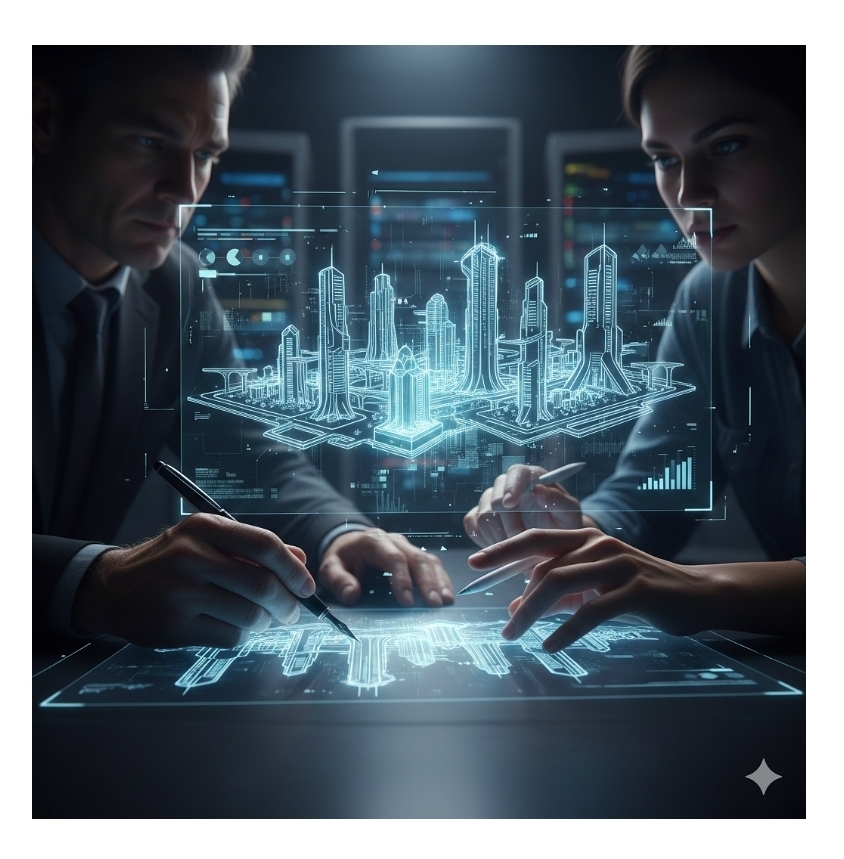
Today AI is doing the same thing, but instead of coastlines and rivers, it maps the invisible landscapes of creativity, ethics, and imagination. Artificial Intelligence is not just a tool; it is a compass pointing towards new intellectual geographies. The one where human intuitions, which once struggled to navigate complexity, now draw the contours of possibility, showing us terrains we didn’t even know existed.
I want to divide this into three major areas I studied in one of my classes: The Creativity Factor, The Ethics Factor, and Human Imagination.
Creativity: The Archipelago of Ideas
Explorers once stumbled upon islands that reshaped trade and culture. AI now uncovers “islands of thought” — unexpected connections between art, science, and storytelling.
As I explained my challenge, I don’t brag that I can write a poem in ten minutes for any extempore idea you give me. That was my genre. Still, reclaiming no bragging here, but one of my sides. Now, if I say this, a person would reply: I’d rather put the prompt in AI and let it do the work. You know how it is!
A generative model can compose music inspired by both Mozart and hip hop. It can design algorithms that blend Bauhaus minimalism with Indian temple architecture.
These are not random outputs; they are maps of creativity, charting waters where human imagination can sail further.
But I love challenges. A music producer, writer, or anyone who loves creating would definitely use their own intuition, their creative flair, their raw ideas — and then amalgamate those with technology. That’s the human centric feature we’re talking about.
So it’s not AI generating, but AI assisting the artist to paint the picture of imagination they want.
Ethics: The Compass of Responsibility
Ethics are core values one can inculcate. They are not simply about good or bad. Remember the explorers? They carried compasses because they knew that with their intellectual power, a compass was an assistant — without it, maps were useless.
In AI, ethics is that compass.
The core values of ethics — transparency, fairness, and accountability — are essential. Transparency is the northern star, fairness the true north, and accountability the longitude and latitude.
Without ethical navigation, AI risks becoming a pirate ship — powerful but reckless. With ethics, AI becomes a vessel of trust, charting routes toward justice and inclusion.
Human Imagination: The Horizon of Possibility
When explorers saw the outlines of new continents, they didn’t just redraw maps — they redefined civilization.
That’s exactly what AI is doing now: sketching the outlines of human imagination itself.
It not only helps visualize imagination but grounds it in quantum mechanics. Isn’t that the wowsome factor? It can model climate futures, simulate social systems, and test policies before they’re enacted.
These are not just maps of knowledge; they are maps of possibility, expanding the frontiers of what humanity can dream. That’s where we need to be optimistic, keeping a human centric approach as we dive deep into these oceans of imagination pouring infinitely through the models.
The past explorers faced storms, mutinies, and blank horizons. Today’s explorers face data overload, bias, and ethical dilemmas. But the spirit is the same: courage to step into the unknown.
AI is the new cartographer. It doesn’t replace human explorers — it equips them. Just as maps didn’t sail ships but guided sailors, AI doesn’t replace judgment but amplifies it. That’s where we are right now: from Oceans to Algorithms.
The Paradox of Costless Creativity
But then there lies the paradox we call the Paradox of Costless Creativity. The primary reason people fear labor will be devalued is that AI brings the marginal cost of production down to near zero.
To write a book, a poem, or an extempore essay once cost human imagination, values, understanding, command of language, poetic flow, hours of contemplation, and even physical labor. That toil and sweat gave the piece its value.
Now AI can generate a poem in three seconds. The “labor” of writing is essentially $0.
If we judge work only by the final product, human labor looks worthless by comparison. But in truth, it’s not floccinaucinihilipilification — the value shifts from turmoil to intent and responsibility.
Labor isn’t disappearing; it is changing shape. We are moving from being the builders to being the architects.
In a human centric world driven by AI, it’s important to prevent floccinaucinihilipilification — which means keeping humans in the loop.
Anchors to Preserve Human Value
Experts suggest several anchors to keep human value high:
The Accountability Factor: Machines cannot be sued or held responsible in a moral sense. Human labor remains valuable because it provides the guarantee of conscience.
The Scarcity of Authenticity: Just as digital photography made film more valuable as an art form, AI will make unfiltered human thought a luxury. The struggle to prove your poem is yours is actually a signal of its rising value.
The Complexity Gap: AI excels at the “known unknowns” — things it has seen in data. Human labor remains essential for the “unknown unknowns” — the true breakthroughs that don’t exist in the training set.
At the end of the day
The age of exploration was never just about geography; it was about imagination. In the same way, AI’s maps are not just about data — they are about destiny.
The question is not whether AI will chart the future, but whether we will steer wisely across the landscapes it reveals.
The true danger is not that AI will do our work, but that we will begin to value the efficiency of the output over the dignity of the effort. We must treat human labor not as an inefficiency to be automated, but as the only force capable of turning a cold map into a lived destination.
AI may be the new cartographer, but maps alone don’t make journeys. The sweat, the doubt, the late night scribbles — that’s what turns a cold outline into a lived adventure. If we start valuing only the efficiency of the output, we risk forgetting the dignity of the effort. And effort, no matter how costless creativity becomes, is the one thing machines can’t fake.
Rachana Bahel