🌀 Supercalifragilisticexpialidocious Thinking in the Age of AI
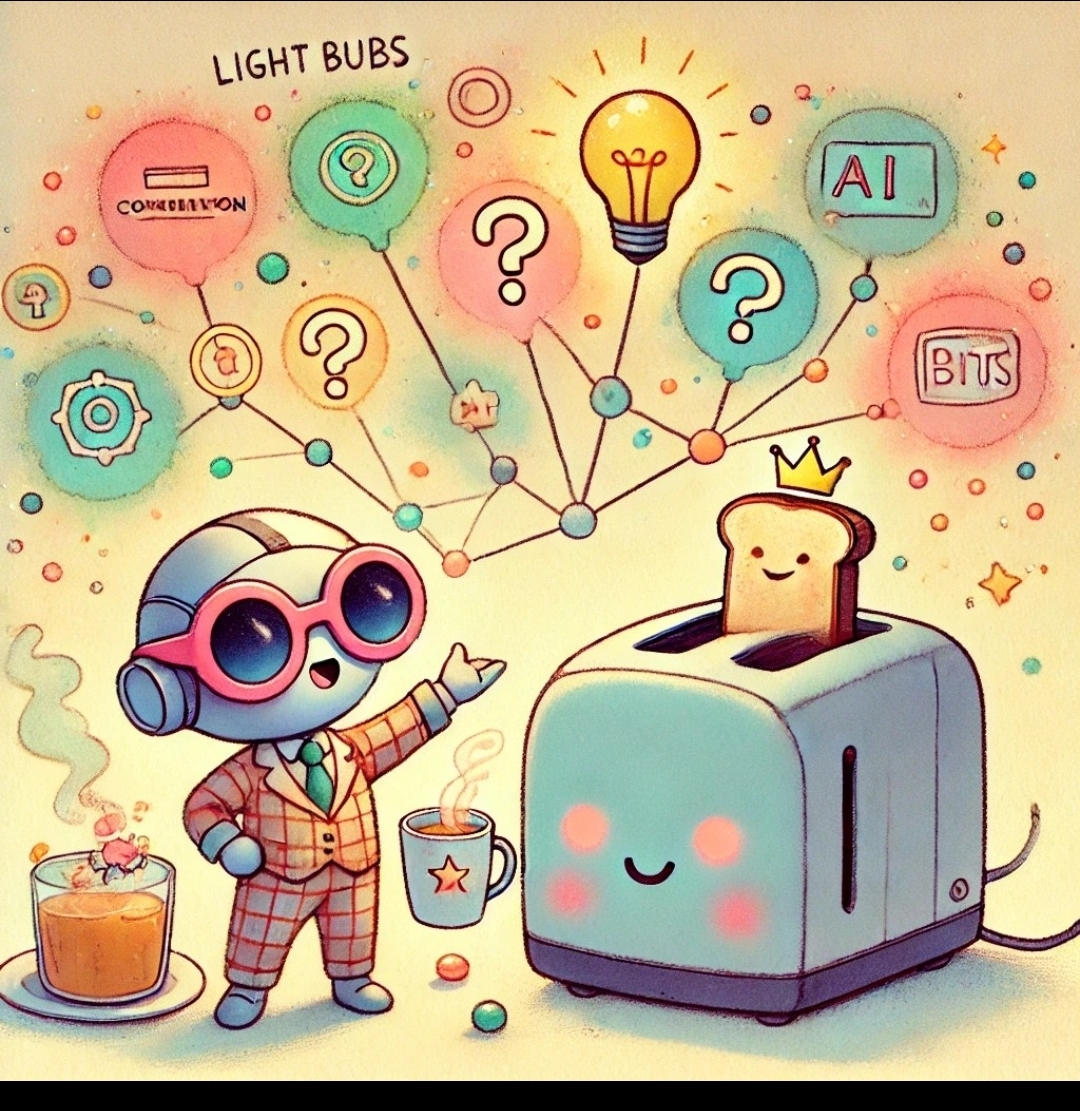
Artificial Intelligence has become the world’s favorite buzzword — tossed around like confetti at a wedding where nobody remembers who the bride is. It promises miracles, but sometimes delivers fatious nonsense. That’s where critical thinking strolls in, wearing sunglasses, sipping chai, and muttering, “Hold on, let’s connect the dots before we crown the toaster king of wisdom.”
🎭 The Jinxed Pattern Problem
AI loves patterns. It sees them everywhere — cats plus toast equals destiny, bananas equal happiness, spreadsheets equal enlightenment. But without critical thinking, these patterns are like jinxed lottery tickets: flashy, but useless.
AI says: “Correlation equals causation.”
Critical thinking replies: “Succincts correction: no, it doesn’t.”
Result: fewer fatious conclusions, more actual insight.
🍿 Idioms Meet Algorithms
Let’s mix idioms with AI’s quirks:
Don’t put all your eggs in AI’s basket — unless you enjoy scrambled nonsense.
The proof is in the pudding — but AI sometimes serves pudding made of binary code.
Barking up the wrong tree — AI once insisted Shakespeare wrote Harry Potter.
Every cloud has a silver lining — unless AI mistakes the cloud for a database outage.
🚀 Why Critical Thinking Matters
Critical thinking is the compass that keeps AI from wandering into absurdity. It connects data to reality, filters out fatious noise, and ensures that “supercalifragilisticexpialidocious” doesn’t become the official name of your next business strategy.
Without it, AI is just a parrot with Wi‑Fi. With it, AI becomes a quirky duet partner — one who occasionally sings off‑key, but still helps you discover new melodies.
🎉 AI is the map, critical thinking is the compass. One without the other is either lost or boring. Together, they’re a supercalifragilisticexpialidocious adventure — equal parts satire and sanity — reminding us that laughter and logic can coexist in the age of algorithms.
Rachana Bahel