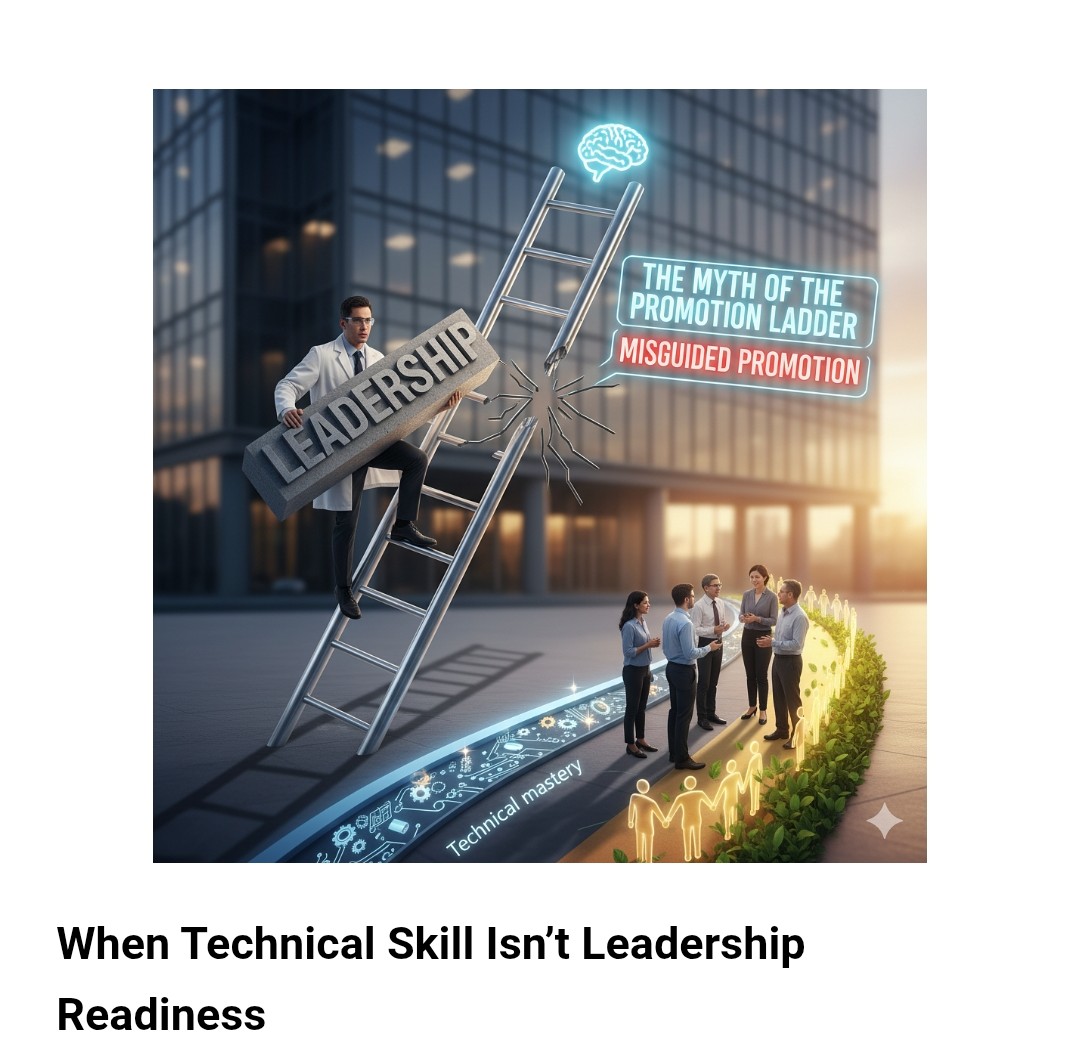
📰 The Myth of the Promotion Ladder
When Technical Skill Isn’t Leadership Readiness
In many organizations, there's an unspoken assumption: if someone is technically brilliant or has been around long enough, they must be ready to lead. But here’s the truth—not every great individual contributor is meant to be a people manager. And that’s okay.
Yet, we continue to see a pattern: promotions handed to the “creamy layer”—those perceived as technically elite—without evaluating their ability to lead with empathy, communicate with clarity, or coach with intent. Leadership becomes a reward for tenure or technical depth, not a responsibility earned through emotional intelligence, accountability, or people-first thinking.
🚨 The Real Cost of Misplaced Promotions
Promoting someone without the skills to lead people is more than a misstep—it’s a failure of leadership at the top. It signals that visibility matters more than impact, and that favoritism trumps fairness. Worse, it leaves behind those who’ve been quietly delivering for years, waiting for a chance to grow.
When leaders promote individuals who haven’t earned the trust of their teams, haven’t demonstrated servant leadership, and haven’t even taken the time to listen—they’re not just promoting the wrong talent, they’re eroding the culture.
🧭 What True Leadership Requires
A real people manager doesn’t just look at the top performers—they evaluate the entire team. They ask:
Who’s been consistently contributing for 2–3 years or more?
Who’s shown growth, resilience, and potential—even if they’re not loud about it?
Who needs a push, a plan, and a mentor—not a pass-over?
If someone isn’t ready for promotion, they deserve honest feedback, a progression plan, and a clear scope to grow. That’s what leadership looks like—not just rewarding the visible, but developing the capable.
💡 A Better Way Forward
Let’s stop treating leadership as a default next step. Let’s build dual career tracks—one for technical excellence, another for people leadership. Let’s invest in leadership readiness, not just reward systems. And most importantly, let’s listen to the voices of those who’ve been quietly delivering, growing, and waiting for a fair shot.
Because leadership isn’t a title. It’s a responsibility. And it starts with how we choose who gets to lead.
-Rachana Bahel