🚨 The Hidden Cost of Half-Truths: Why Managerial Transparency Is Non-Negotiable
In any organization, the manager is not just a task allocator—they are the compass that guides the team through uncertainty, change, and growth. But what happens when that compass is foggy? When transparency is replaced by half-information, confusion takes root, trust erodes, and the team’s momentum stalls.
🔍 The Danger of Half-Information
When a manager withholds key details—intentionally or not—it creates a vacuum. Team members begin to speculate, misinterpret, or make decisions based on incomplete data. This doesn’t just slow down progress; it breeds frustration, disengagement, and even conflict. In high-stakes environments, it can lead to costly errors or missed opportunities.
Transparency isn’t about oversharing—it’s about clarity. It’s about giving your team the context they need to make informed decisions and feel confident in their roles.
🧠 Debate Is the Lifeblood of Innovation
A team that doesn’t debate is like a sugar-free cake: it looks fine, but it lacks flavor. Healthy debate isn’t a sign of dysfunction—it’s a sign of engagement. When managers encourage open dialogue, they unlock creativity, challenge assumptions, and build psychological safety.
Leadership welcomes discussion—it doesn’t forbid it. A leader who only believes in issuing declarations, without leaving room for dialogue, should reconsider calling themselves a leader. True leadership is built on exchange, not monologue.
⚖️ Bias and Balance in People Management
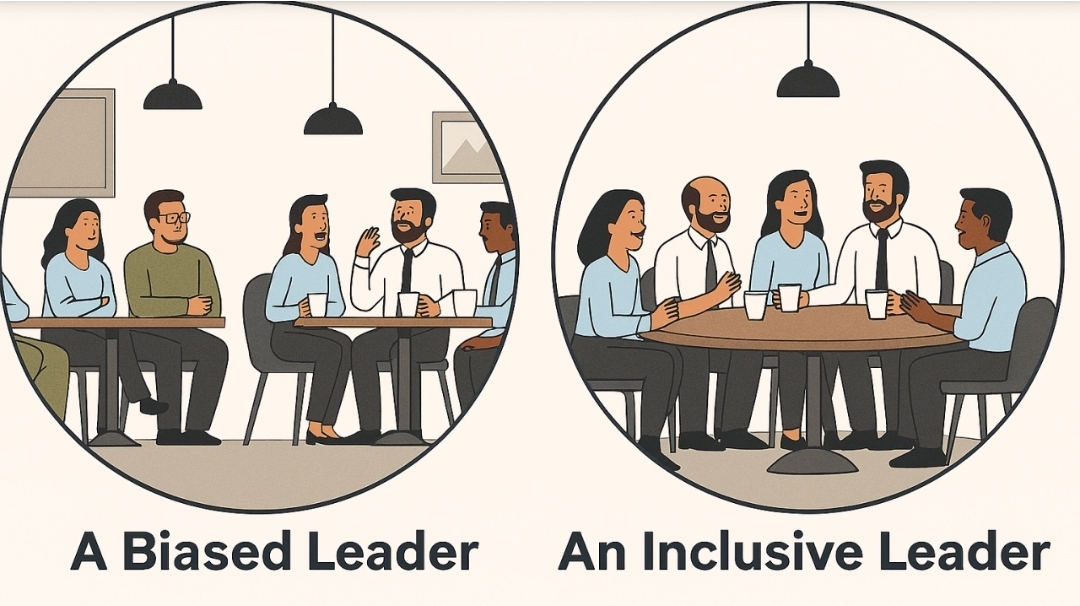
Leadership may involve conscious bias—such as recognizing individual strengths or tailoring support based on roles—but it must never compromise fairness. In people management, a true leader ensures that every team member receives equal support, opportunity, and respect.
Favoritism, even if subtle, can fracture team unity. A manager’s role is to uplift the whole team, not just a few. That means being aware of personal biases and actively working to neutralize them in decision-making, feedback, and recognition.
💛 Leadership Rooted in Compassion
A true leader leads with clarity, empathy, and—most importantly—compassion. They give everyone equal opportunity to grow, to be in the room, and to speak up. They don’t divide their team into “favorites” and “others,” treating some as their own and others as outsiders.
They sit with everyone. They have those informal coffee chats that make people feel seen. They make each person feel confident, valued, and worthy—regardless of title or tenure. That’s not just leadership; that’s humanity in action.
🤝 Confidence Is Contagious
A manager who trusts their team empowers them. They delegate with clarity, check in with purpose, and celebrate progress. This confidence isn’t blind—it’s built on mutual respect and accountability. When a manager believes in their team, the team begins to believe in themselves.
But confidence must be backed by consistency. If a manager’s actions contradict their words, or if they play favorites with information, that trust quickly dissolves.
✅ What Great Managers Do Differently
They communicate the “why” behind decisions.
They invite questions, even uncomfortable ones.
They share challenges, not just victories.
They check in—not to micromanage, but to support.
They foster a culture where debate is welcomed, not feared.
They balance individual attention with team-wide fairness.
They lead with compassion, not comparison.
Transparency isn’t a luxury—it’s a leadership imperative. When managers lead with clarity, fairness, and compassion, they don’t just build teams—they build trust, resilience, and purpose. In a world full of noise, great leaders choose to be clear. Because when the compass is true, the team doesn’t just follow—they thrive.
Rachana Bahel